Why industrial IoT pilots fail before they scale

A working prototype is rarely the hard part of an industrial IoT program. The hard part is what happens after the demo, when a device has to survive dust, vibration, intermittent connectivity and an operator who was never consulted about the interface.
The pattern we see most often
Programs stall for a small, repeatable set of reasons:
- The hardware was designed by one vendor, the software by another, and nobody owned the handoff between them.
- The pilot proved the sensor worked, not that the operating model around it made sense.
- Field adoption was treated as a training problem instead of a design problem.
None of these are technology failures. They are structural failures in how the program was scoped and delivered.
What changes when one team owns the whole stack
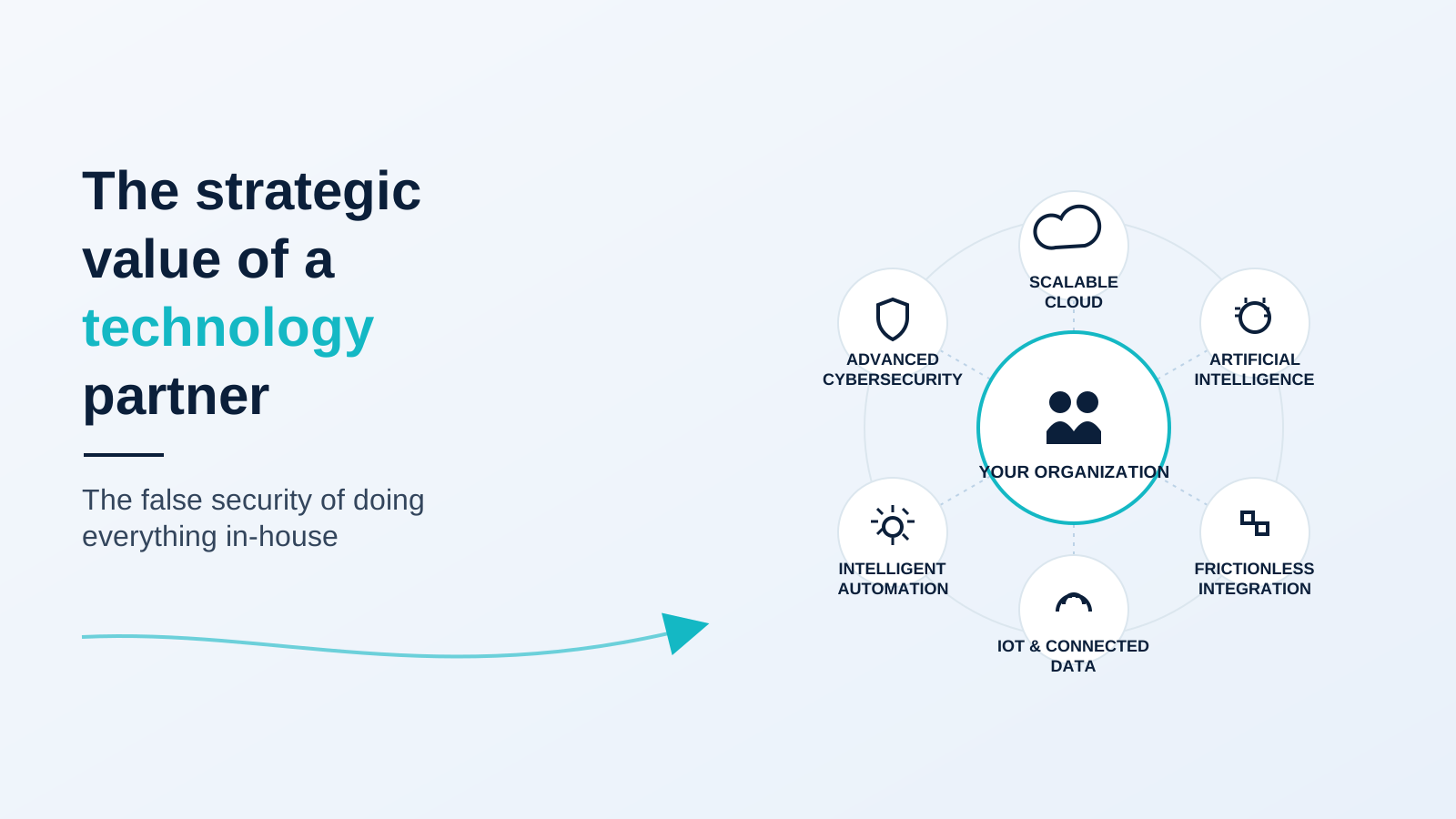
When electronics, firmware, software and rollout live inside the same engineering organization, the conversation about trade-offs happens before deployment, not after a failed pilot. A sensor placement decision can account for the dashboard that will consume its data. A firmware update can be planned around the connectivity reality of the site, not a lab assumption.
This is the operating model BWhale applies across mining, logistics and agriculture programs: one accountable team, from board design to the cloud layer, so the pilot-to-scale transition is a plan, not a hope.